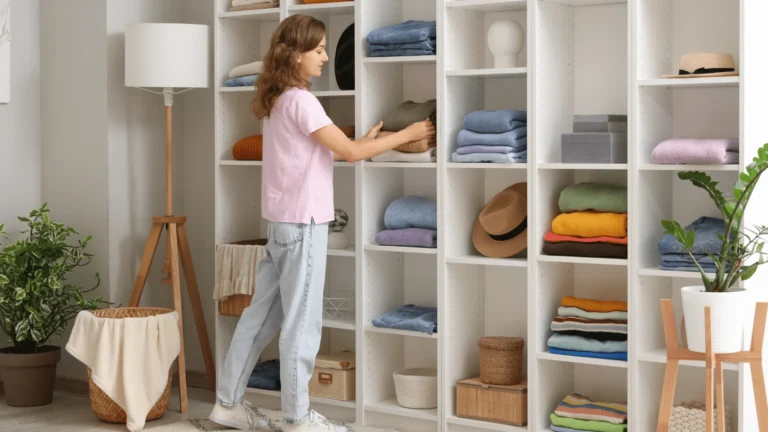
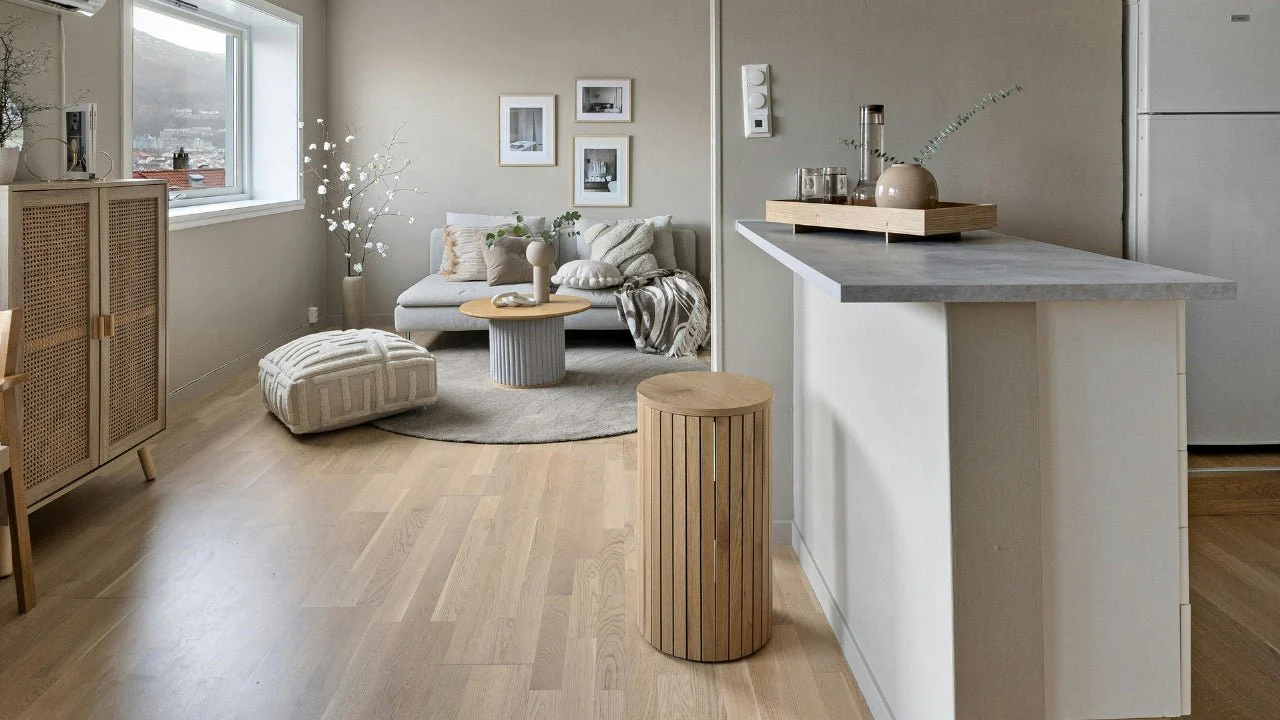
Use home organisation strategies that go beyond decluttering to transform your area (and your thinking).
Even after a demanding workday, are you feeling anxious at home? Even after trying yoga, meditation, or even a massage, you could still feel anxious as soon as you come through the door.
Have you ever considered the possibility that your schedule is not the true problem? but your personal area?
According to studies, a cluttered home might make you feel more stressed, but cleaning up makes you feel in control and at ease. People who have clean houses are generally healthier, according to an Indiana University study.
Where do you begin, then? These useful suggestions for organising your home will help with that. With useful tools to make the process easier (and possibly even enjoyable), we will lead you through what to do before, during, and after the decluttering process.
A Few Things to Do Before You Start
It is helpful to take a moment to consider why you desire a more clutter-free room in the first place before diving into bins and baskets.
Establish Specific Objectives (And Make It Personal)
Consider your reasons for wanting a better-organized home first.
Is it to make you feel less anxious as soon as you enter? to cut down on morning preparation time? Or perhaps just to stop misplacing the scissors every other day?
Remember your reason, whatever it may be. When you are in the thick of a mess and wondering why you started, that “why” will keep you motivated.
Another piece of advice is to avoid trying to complete everything at once. That is a quick route to burnout. Take it one tiny area at a time instead. Perhaps this week it is only the junk drawer in your kitchen. Next weekend, your entryway. These small victories do add up.
Why not envision how your place might appear as well? Envision spotless worktops, comfortable nooks, and everything in its proper place. Keep that picture in your mind. Make it your own Pinterest board.

Adapt Your Home to Your Real Lifestyle
Do you frequently leave your shoes at the door? Or someone who throws their suitcase on the closest chair? Consider yourself when you are decluttering. You do not have to act like you keep everything in a separate room. You are planning not for a magazine feature, but for real life.
Instead than working against your habits, work with them. Because, let us face it, if you put up a fancy shoe shelf in your bedroom closet, it will not be long before those same shoes start to accumulate in the corridor once more.
Rather, arrange your area according to your current activities. Put a tiny basket for flip-flops or a boot tray besides the door. When everything has a place where it is utilised, it is much easier to maintain order.
It also does not have to be difficult. If your mail, bags, and keys frequently end up on the kitchen counter, simply place a little tray there and attach a few hooks to make it appear as though you had planned it all along.
Small modifications like these make a tremendous difference over time, and they truly stick.
Easy Techniques for Decluttering
Okay! Your thinking is in control and you have established your objectives. It is time to get into the actual organising advice for decluttering your house.
Let Go Without Feeling Bad
Decluttering can cause a range of emotions, including nostalgia, remorse, and possibly even a little panic. Completely typical. But here’s the thing: it is acceptable to let go of things that do not match your life anymore.
Clear Your Clutter with Feng Shui is a fantastic book that delves further into this. In addition to discussing how to get rid of things, it also discusses creating space for your current self rather than your former self. A quieter, more purposeful house is accessible when you let go of things that no longer benefit you.
Use the “One In, One Out” Rule.
If something new comes in, something else goes out. This is one of the simplest strategies to manage clutter.
Purchased a new sweater? One that has been gathering dust in the back of your closet should be thrown away. This “one in, one out” approach prevents your space from gradually filling up again and encourages you to reconsider bringing in items you do not really adore.
Over time, this small mental adjustment has a significant effect.
Keep a Donation Box Handy

Keeping a donation box in a convenient location, like the laundry room, closet, or even by the entrance, is one of our favourite home organisation strategies. Throw anything in the box if it does not fit, is broken, or just is not you anymore.
Do not overthink it. Drop it off at your neighbourhood thrift store after it is filled. It feels less dramatic and more like a regular part of your routine when you have that box ready to go.
Invest in Your Look (and Conserve Space)
Hiring a personal stylist to assist with clothing decluttering is another wise move. Over time, it might save you a significant amount of money, even if it may seem like a luxury.
You will stop purchasing clothing that does not fit your body type or skin tone, and before long, every item in your closet will be something you genuinely enjoy and wear.
A smaller, better-curated wardrobe that feels effortless and clutter-free will be the end result. If you are unable to hire a stylist, you can still adopt the same approach: only keep what suits and appeals to you.
Keep Commonplace Items Close at Hand
After clearing out the clutter, it is time to think carefully about where items reside. Start with the items you use on a daily basis, such as your go-to coffee mug, favourite sweater, or cooking pan.
Do not conceal these behind stacks of items you hardly ever touch. Keep them front and centre to make life easier. You will feel much more in control, save time, and prevent irritation.
Sort Items Based on Their Use
Consider your house in small areas. Organise office items in a drawer or caddy, keep cleaning supplies grouped together, and place food prep tools close to the stove.
Sorting items according to their intended usage simply makes life easier. There will not be any more searching three separate rooms for scissors. Even when life gets a little chaotic, this is one of the simplest methods to reduce confusion and maintain a feeling of order in your environment.
A small amount of consideration now will result in far less worry later.
Use Hooks, Shelves, and Wall Racks to Go Vertical
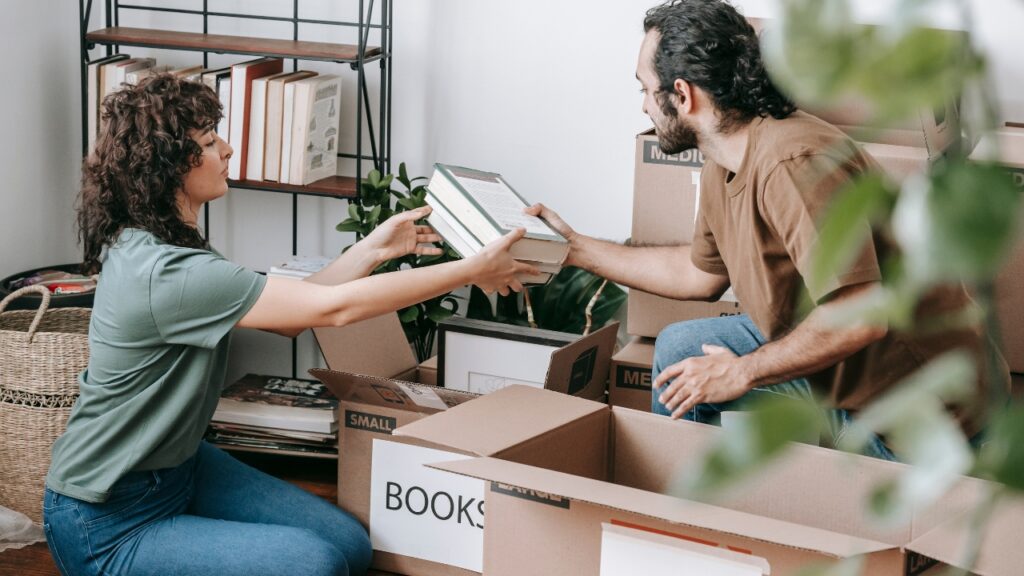
Go vertical if you do not have enough storage! Your hidden weapon is vertical space. Include hooks for bags and coats besides the entryway. Put tools, pots, and even cleaning materials on wall racks. Additionally, floating shelves have the potential to transform everything.
You may conserve room and maintain visibility and accessibility by moving items from the floor to the wall.
To keep everything organised, use bins and labels.
Boxes, drawers, and bins are fantastic—but only if you know what is inside. Labels are useful in this situation. They facilitate finding and rearranging stuff, especially for other household members.
Home organisation labels for storage bins keep your system functioning properly, whether you are arranging craft supplies, snacks, or seasonal clothing. You can use a pen, make your own labels using a label printer, or utilise chalkboard tags.
For your space to remain tidy long after you have organised it, consistency is essential.
Make Use of Tools to Maintain Organisation
It does not have to be done the hard way. Organising your home can be made quicker, simpler, and far less daunting with certain tools.
Consider labels, for instance. Although they may not seem like much, they have a significant impact. It is much simpler to know where things go and to put them back once everything has a distinct name.
For labelling jars, bins, drawers, and anything else that requires some structure, the labelcrisp Thermal Label Printer is ideal. It can help you quickly and effectively organise your area because it is small and simple to use.
Do you want something a bit more imaginative? You can print straight onto materials like wood, containers, glass, and even cloth with the labelcrisp Mini Handheld Inkjet Printer. Completely unique and awesome.
Here’s where labels actually help if you need some inspiration:
Kitchen: Labelling pantry products with labels like “Snacks,” “Grains,” “Tea,” or “Grab & Go” makes it easier for everyone in the house to find what they need fast. Because you will constantly be aware of what is in each jar or container, it also keeps food from going to waste.
Kids’ Room: Make an easy-to-follow system by labelling toy containers, book boxes, and art items. This motivates children to assist with cleanup and makes it easier for them to put items back where they belong.
Bins for storage: When looking for seasonal or infrequently used items, labels like “Holiday Decor,” “Cords & Chargers,” or “Winter Clothes” save you time and frustration. You will not have to go through numerous unmarked boxes because you will know exactly where everything is. You can establish a straightforward, dependable system that keeps your storage spaces tidy and manageable by using home organisation labels for storage containers.
To keep things comfortable and useful, you can even combine printed labels with unique elements like twine or handwritten tags. Little things make a big difference.
How to Keep Your Home Clutter-Free
You successfully decluttered your home by following our suggestions for home organisation. Congratulations! You succeeded. Was it the difficult part?
In actuality, maintaining a clutter-free lifestyle requires some constant work. In a month, you do not want to start decluttering again, do you?
Maintenance is crucial. You can maintain order without stress by adopting a few easy practices. These simple techniques will help you stay organised and maintain a peaceful, clutter-free home.
Establish a Weekly Reset Schedule
A weekly reset is one of the simplest strategies to manage clutter. Choose a time that suits your schedule, such as Friday mornings or Sunday afternoons.
Just fifteen minutes should be dedicated to cleaning up busy areas, rearranging items, and discarding anything that does not belong.
It is a simple, low-effort habit that prevents messes from getting worse. It also provides you with a fresh start for the coming week.
Involve the entire family and work as a team.
The entire family should be involved in keeping your home clutter-free. When everyone participates, it not only reduces the workload but also helps children develop positive habits and learn responsibility.
Make it enjoyable and doable. Assign age-appropriate chores, like as folding throw blankets or rearranging toys in containers. Put a timer on it and make it a short game, such as “Let us see how much we can tidy in 10 minutes!”
It becomes a collaborative effort instead of a hassle when everyone contributes. Maintaining a clean home is much simpler and more enjoyable.
Make use of wall planners or checklists
Being able to see what needs to be done makes it much easier to stay organised. Checklists and wall planners can help with that.
You can stay on top of daily or weekly chores like cleaning, laundry, and room resets by using a straightforward checklist. Wall planners are an excellent way to keep the entire family informed. You may schedule donation drop-off days, mark who is responsible for what, and sketch out cleaning schedules.
In conclusion
Keep in mind that maintaining organisation is a continuous effort rather than a one-time endeavour.
Everything feels a little simpler when your space is set up in a way that suits you, from finding your keys to spending a peaceful evening at home.
Keep in mind that you do not have to work alone. Get some tools to assist you, such as the labelcrisp Mini Handheld Inkjet Printer and Thermal Label Printer, and turn it into a family pastime.
You can truly maintain a clutter-free lifestyle with the correct home organisation advice and resources. You are capable!